Some years back, I decided to embark on a series of Scottish/Celtic themed quilts. As a first- generation American, it was important to honor and celebrate my family’s heritage. Time moved on and eight quilts later it appeared I had achieved my goal. [Note:the stories behind these eight quilts, along with their links, can be found at the end of this post.]
But then it hit me that this series of quilts was not quite done. Culloden suddenly loomed large in my mind. And no set of Scottish-themed quilts would ever be complete without the recognition or acknowledgment of this significant battle. It was such a major turning point in the history of Scotland. And this year 2026 marks the 280th anniversary since the battle took place.
So for one last time, I got out the fabrics, threads… the paper, coloured pencils, et. al., and began to sketch the design that would complete this final quilt commemorating my Scottish heritage.
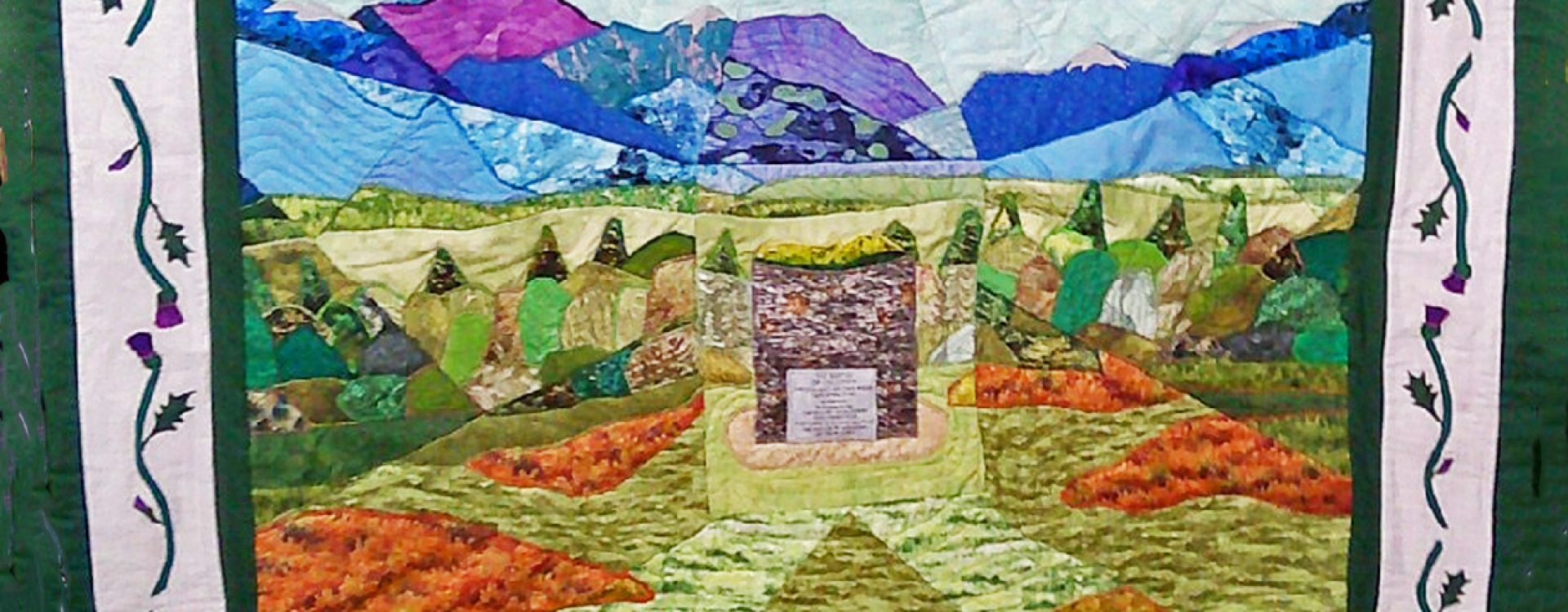
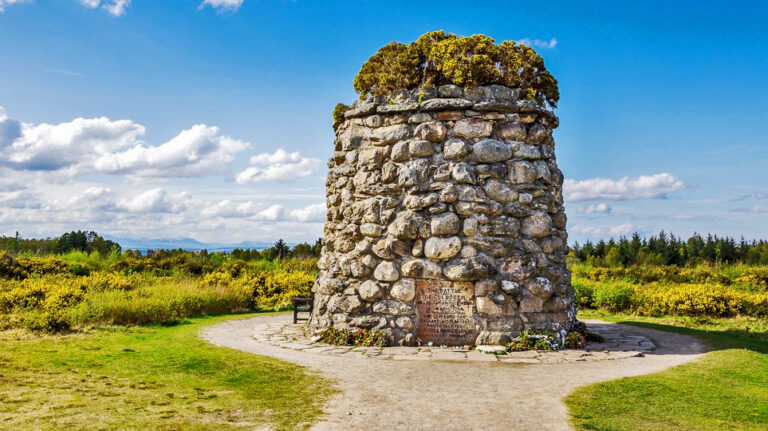
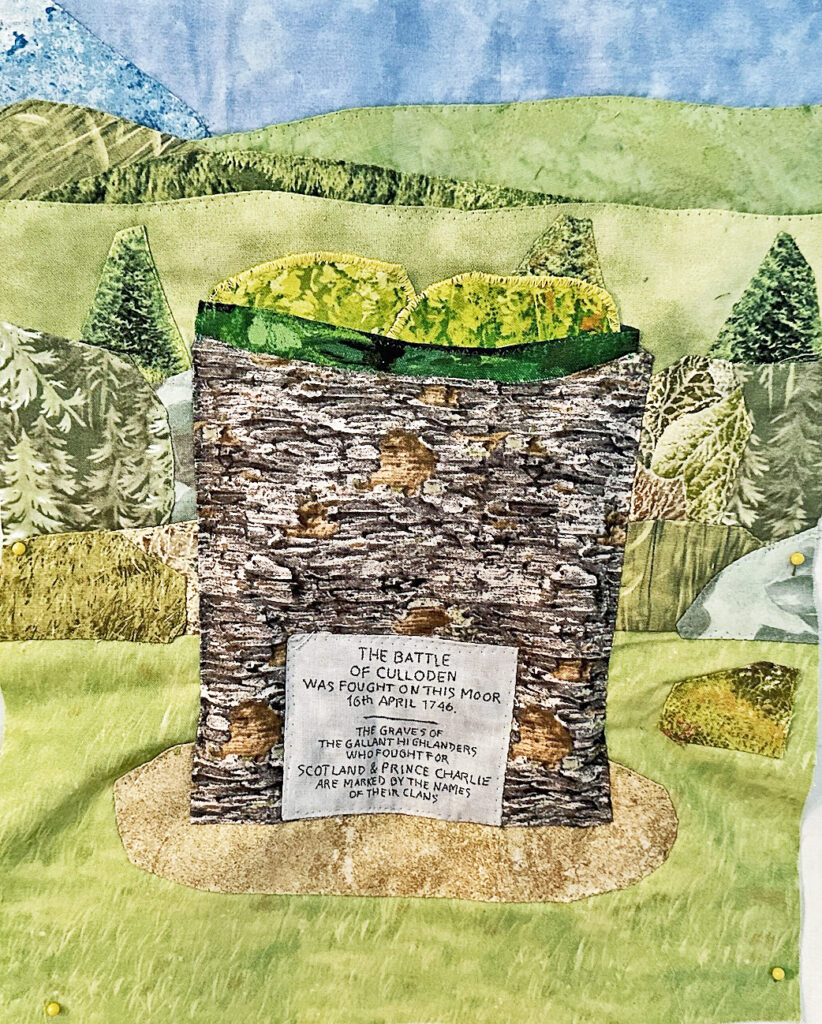
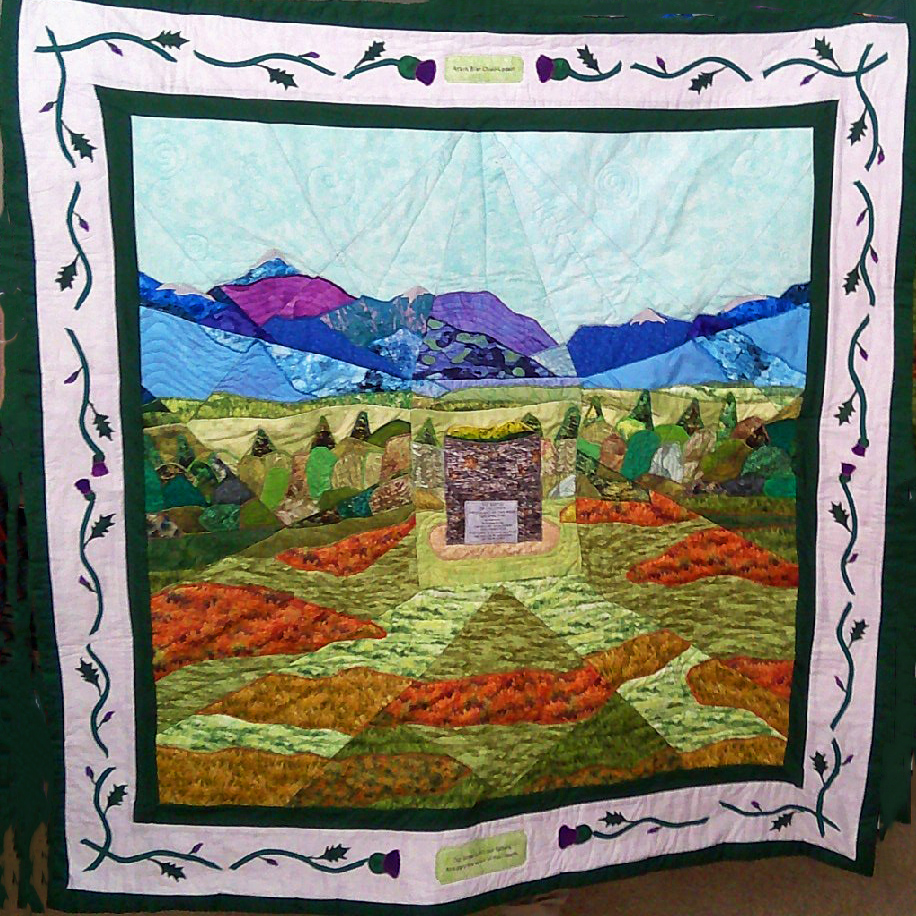
In researching Culloden, this particular view caught my attention. The Memorial Cairn erected on the battlefield, with a view of the Highlands in the background. Quintessential Scotland! All told, it offered the perfect symmetry for a landscape-pieced quilt! How could I resist?
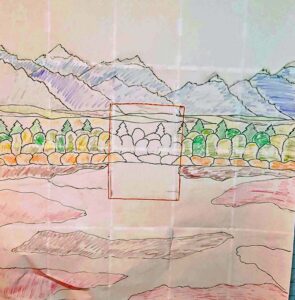
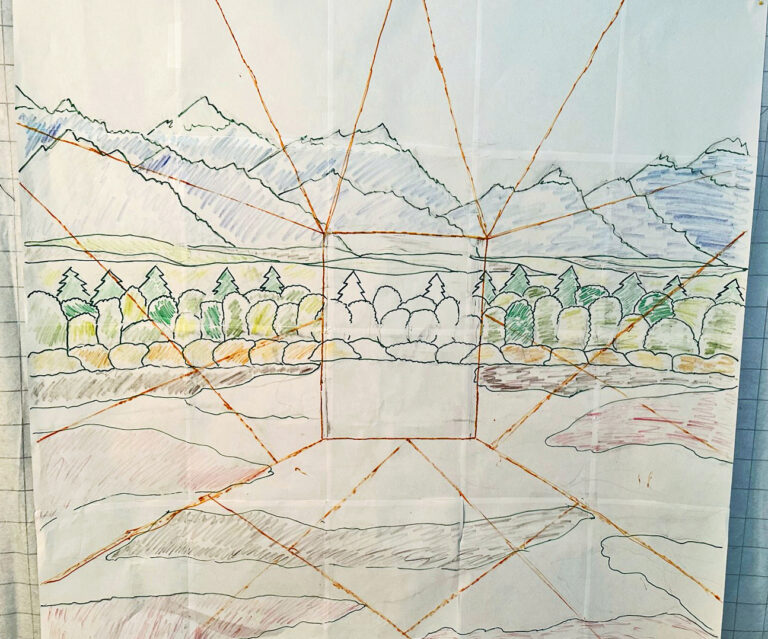
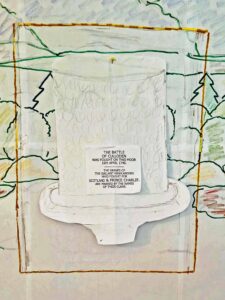
Here you can see the progression of sketches which led to the completed piece. It begins with the total landscape (right)… then moves on to drawing in the fractures (lower left)… and finally centering the Cairn with its’ memorial plaque (lower right).
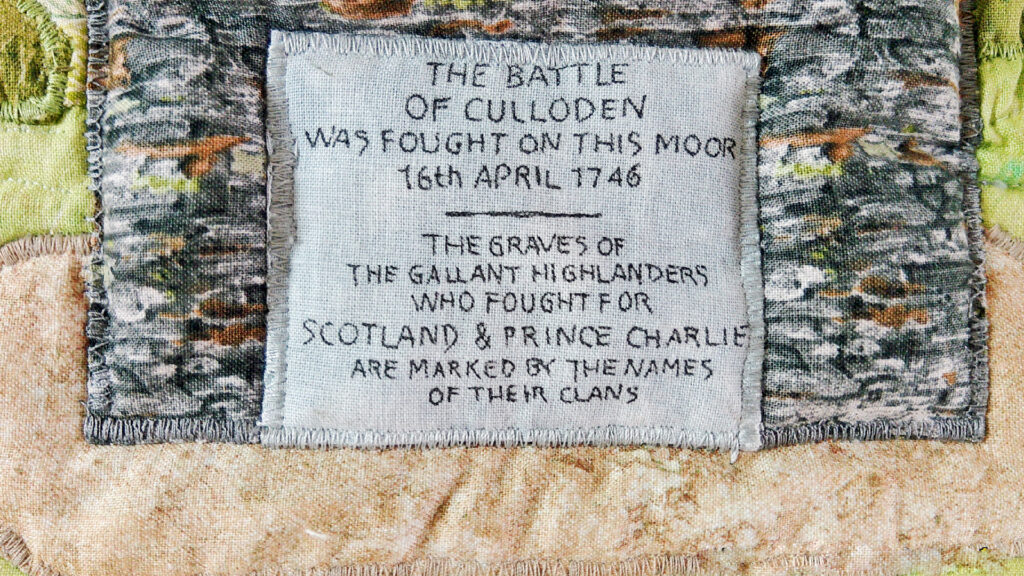
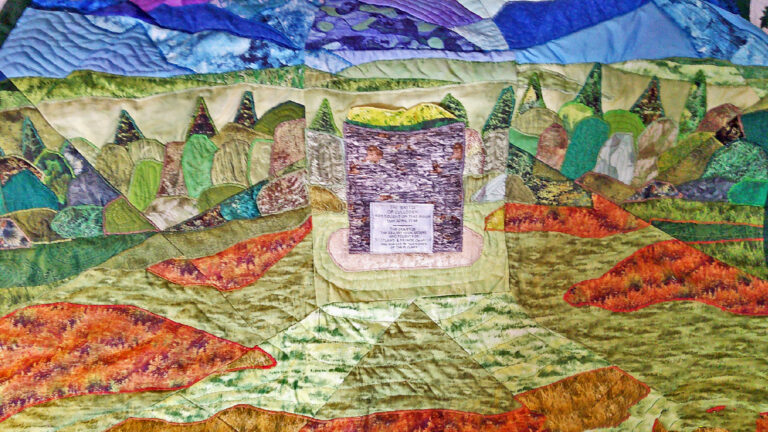
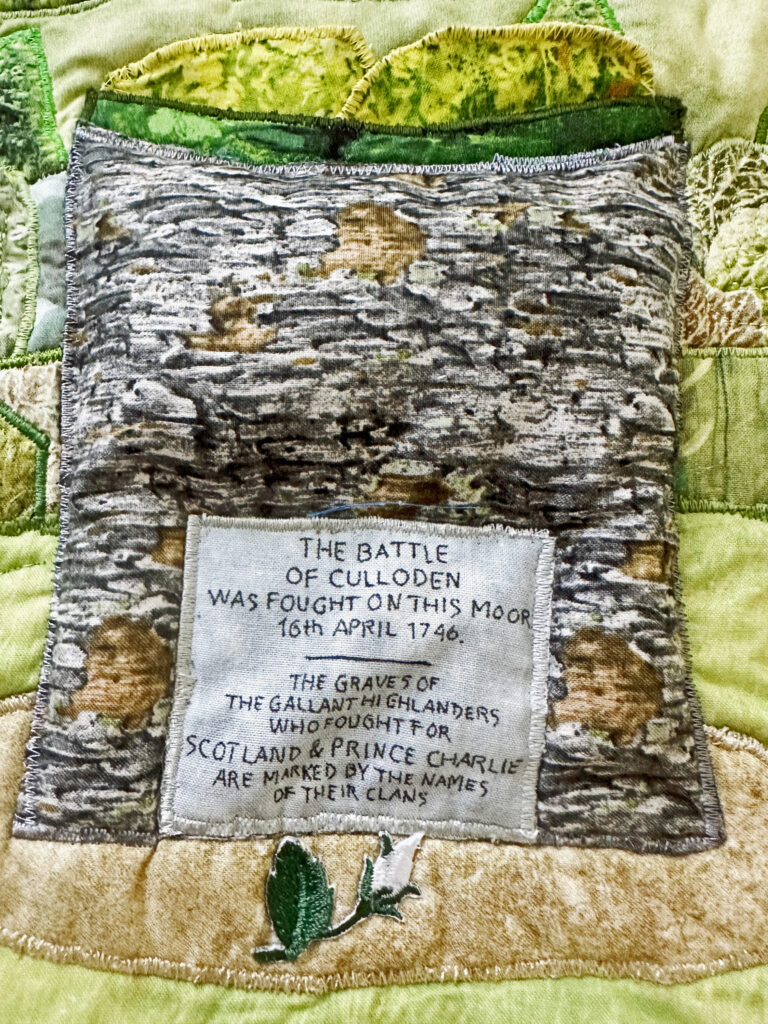
Close-up photos of the Cairn itself. This fracture was done first, and the surrounding landscape built around it.
The Cairn is stitched with lighter-hued fabrics, and the surrounding landscape in medium and darker shaded material. This will make the Cairn, as the centerpiece, stand out more.
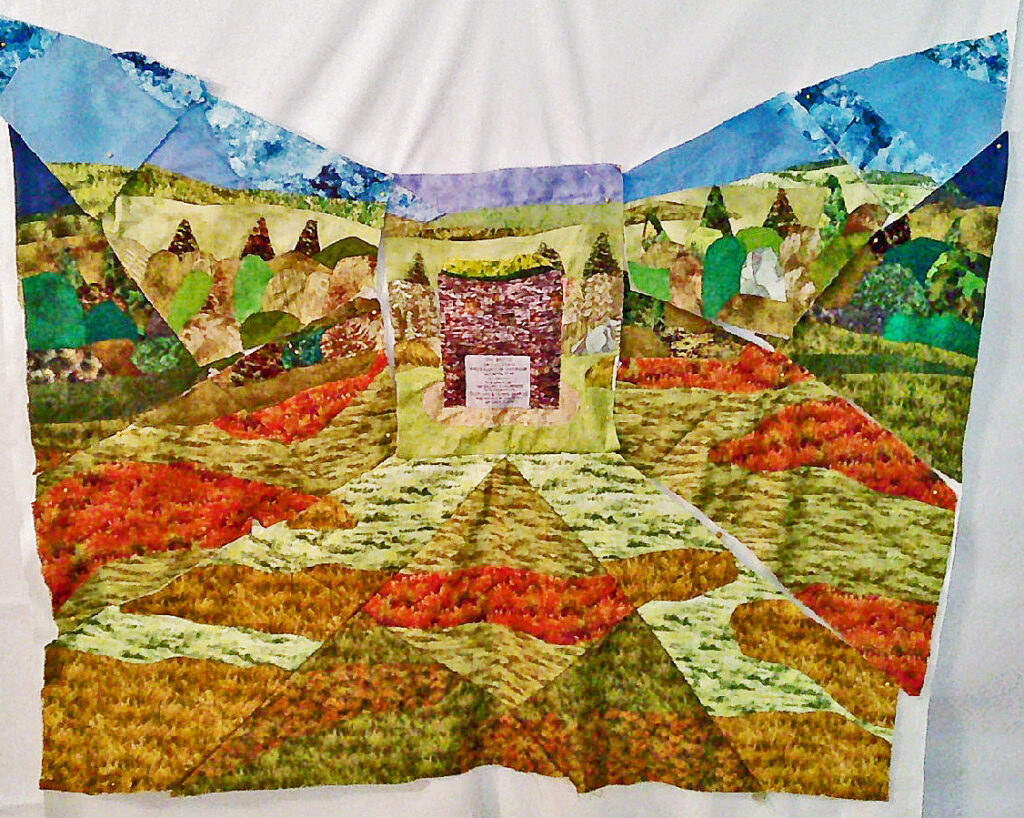
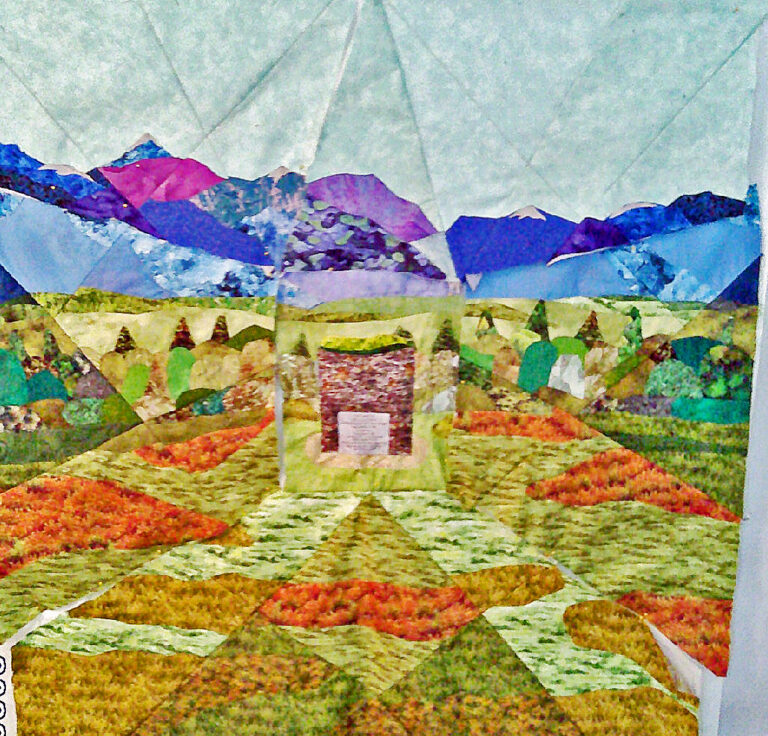
Here the fractures are pieced, in accordance with the original sketch. You can see how they are built up and then pinned into place around the memorial center.
Once all the individual fractures are pieced, they are sewn together into place. At which point, the quilt is now a single whole. And begins to resemble the original sketch.
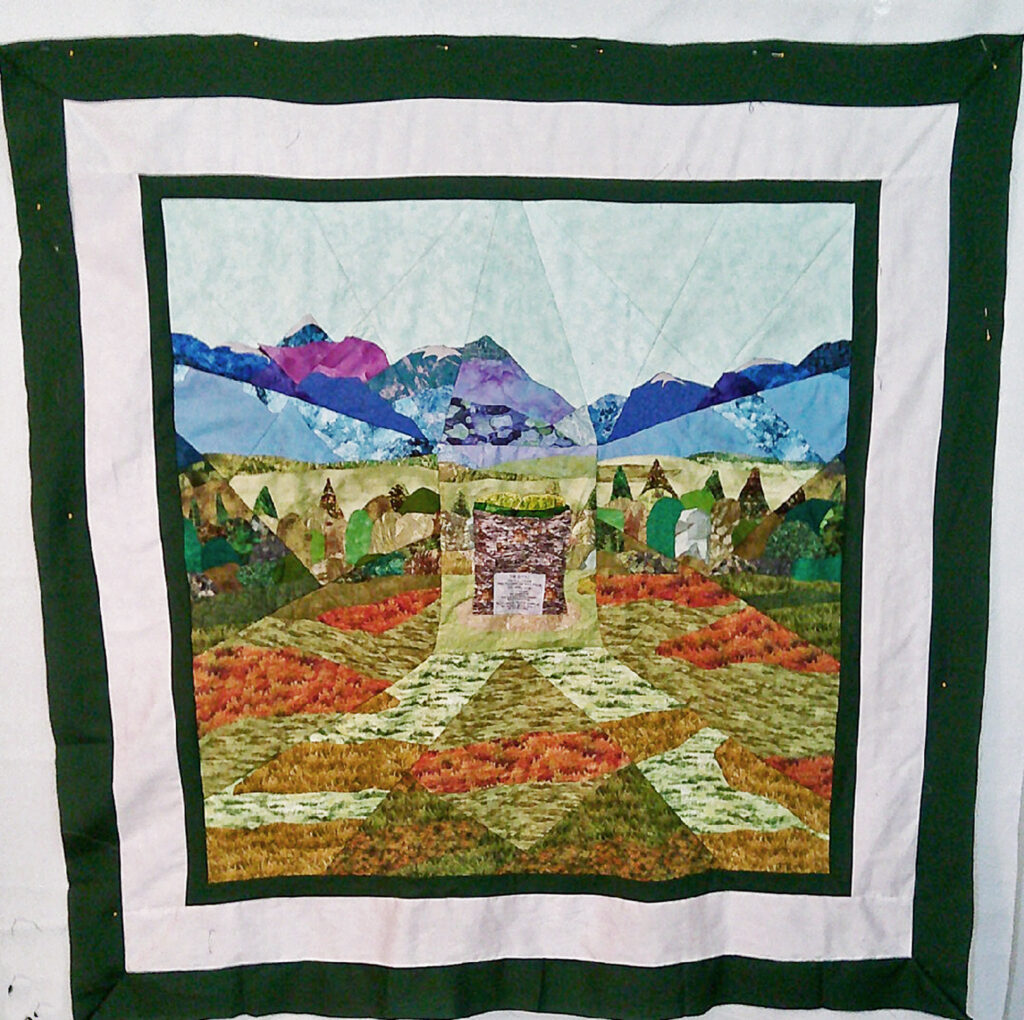
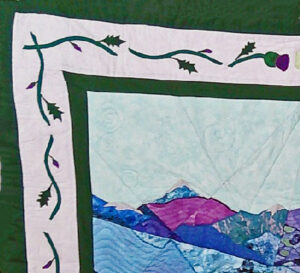
The next step is to add the borders… and what a difference that makes. It actually looks like a quilt! The piece is then ‘sandwiched’ with batting and backing.
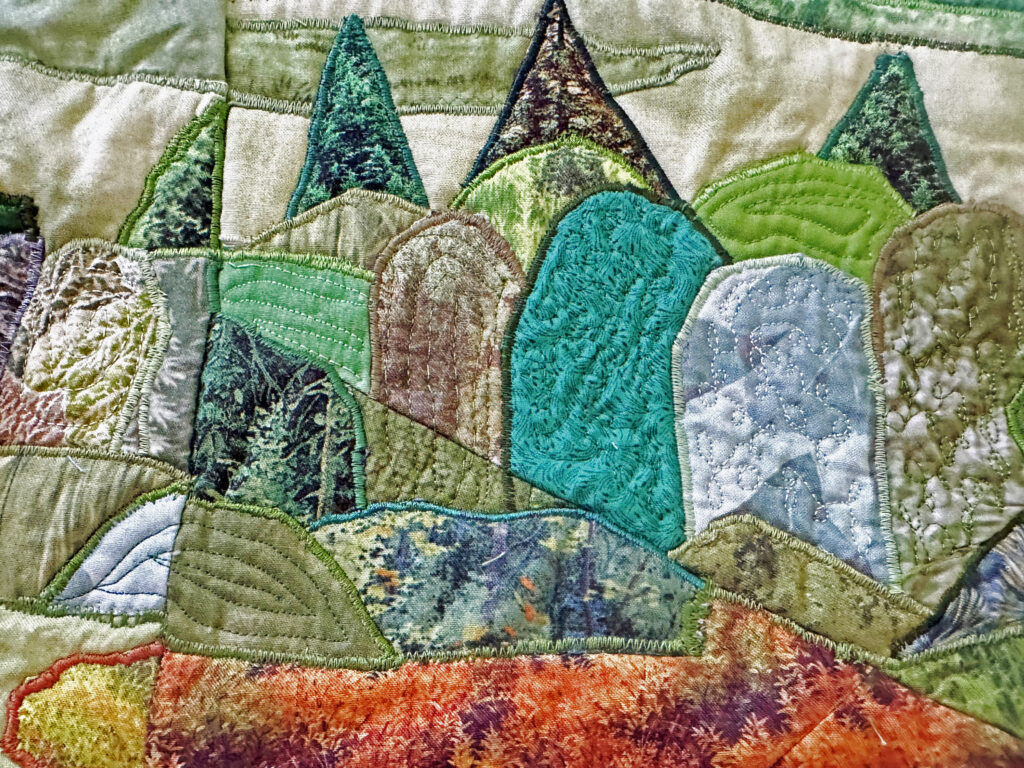
And now… the fun begins with thread-painting. This is my favourite part of the process!
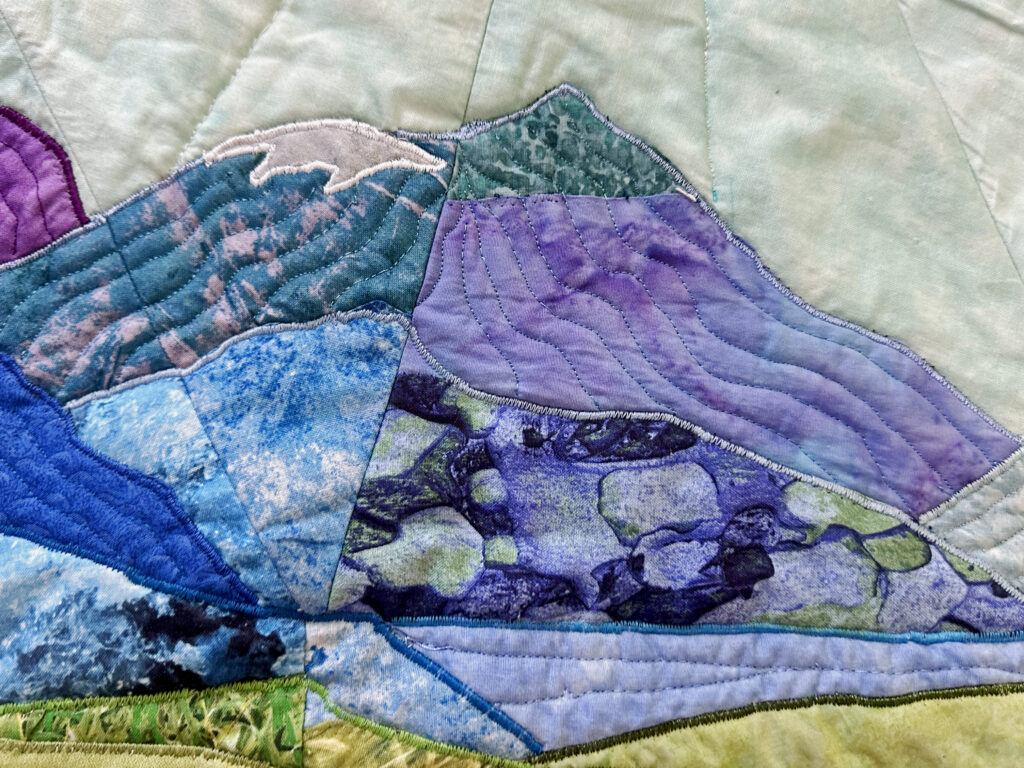
Many separate parts make up the whole. Here you can see the difference a little top-stitching and outlining of the various shapes can make. The stitching crosses right over the various fracture pieces. This helps the eye overlook the individual fractures, and instead see one single landscape.
The finishing touches are now added to the quilt. The white middle border is appliqued with a running design of thistle flowers, and their corresponding buds and leaves. The thistle is Scotland’s National Flower.
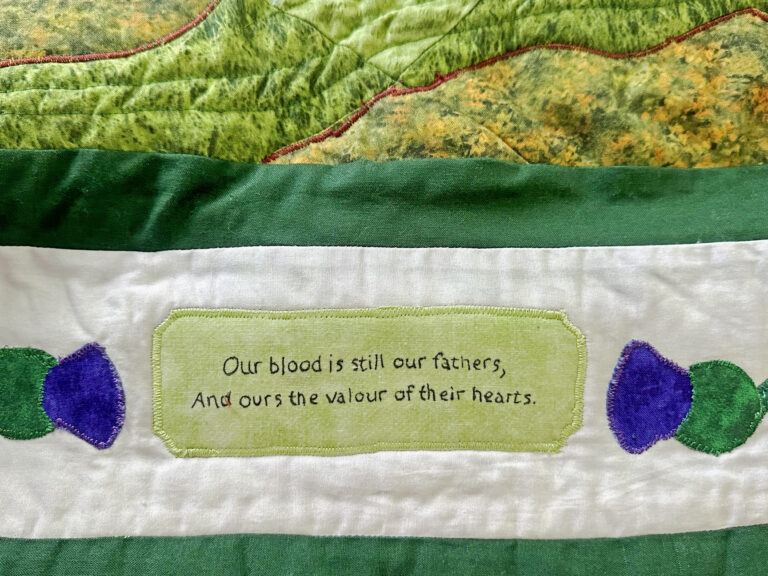
An inscription, written bilingually in both Gaelic and English, can be found on the site. “Our blood is still our fathers, And ours the valour of their hearts.” It is a tribute to the Highland men who died in a valiant attempt to restore the rightful Scottish king to the throne. And that their courageous, and stouthearted, spirit still lives on in the bloodlines of Scots today.
A white rose is placed in homage at the foot of the Memorial Cairn. This was considered a symbol of the Jacobite cause… and an expression of support for the ‘king over the water’ in exile.
And here is the completed quilt… in tribute and memory.
Why was this battle considered so significant? The Scots were just every-day men, both out-numbered and out-armed by well-trained professional soldiers under the command of the Duke of Cumberland – son of England’s king. The clans were crushed, and the countryside laid to waste. It was a massacre which extended well beyond the battlefield with no quarter given even to the innocent… women and children. The Scottish way of life was outlawed… the tartans, Gaelic language, hunting rifles and knives… even the playing of the bagpipes was forbidden. In actuality it was a genocide. But when perpetrated by the son of the English king, it was called justified.
The Scots would rise, in time. Come 1 July 1999, Scotland would seat its own Parliament in Edinburgh for the first time in almost 300 years. Alba Gu Brath!
Following are the links to the series of Scottish quilts, along with the stories behind how they came into being:
Congratulations on achieving your goal of completing this set of quilts & thanks so much by enriching them with the information of what went into their making! Truly, you are an artist, my friend! Thank you for sharing!
2 thoughts on “Culloden: Arach Blar Chuil-Lodair”
Congratulations on achieving your goal of completing this set of quilts & thanks so much by enriching them with the information of what went into their making! Truly, you are an artist, my friend! Thank you for sharing!
And thank you for all the encouragement and positive feedback! Much appreciated!!